You’ve probably been there.
Scrolling through marketplaces.
Spotting products that look underpriced.
Wondering if there’s margin hiding in plain sight.

But then the doubt sets in:
Is it actually profitable?
Are fees going to eat the margin?
Will it sell fast enough?
Am I missing hidden risks?
If you’re researching Flip Ninja, you’re likely looking for an edge.
Not hype.
Not guesswork.
You want a system, something that removes emotion and replaces it with data.
Let’s break this down clearly.
Understanding the AVATAR: Who Is Searching for Flip Ninja?
Based on search intent (informational with light commercial investigation), you’re likely:
- A beginner exploring product flipping
- A reseller on platforms like eBay, Amazon, or Facebook Marketplace
- Someone testing retail or online arbitrage
- Or an entrepreneur seeking automation
Emotional State:
- Curious but cautious
- Motivated by extra income or business growth
- Frustrated by manual product research
- Concerned about wasted inventory
Awareness Level:
You understand the concept of flipping:
Buy low → Sell higher.
But you want structure.
You’re not looking to gamble.
You’re looking to optimize.
What Is Flip Ninja?
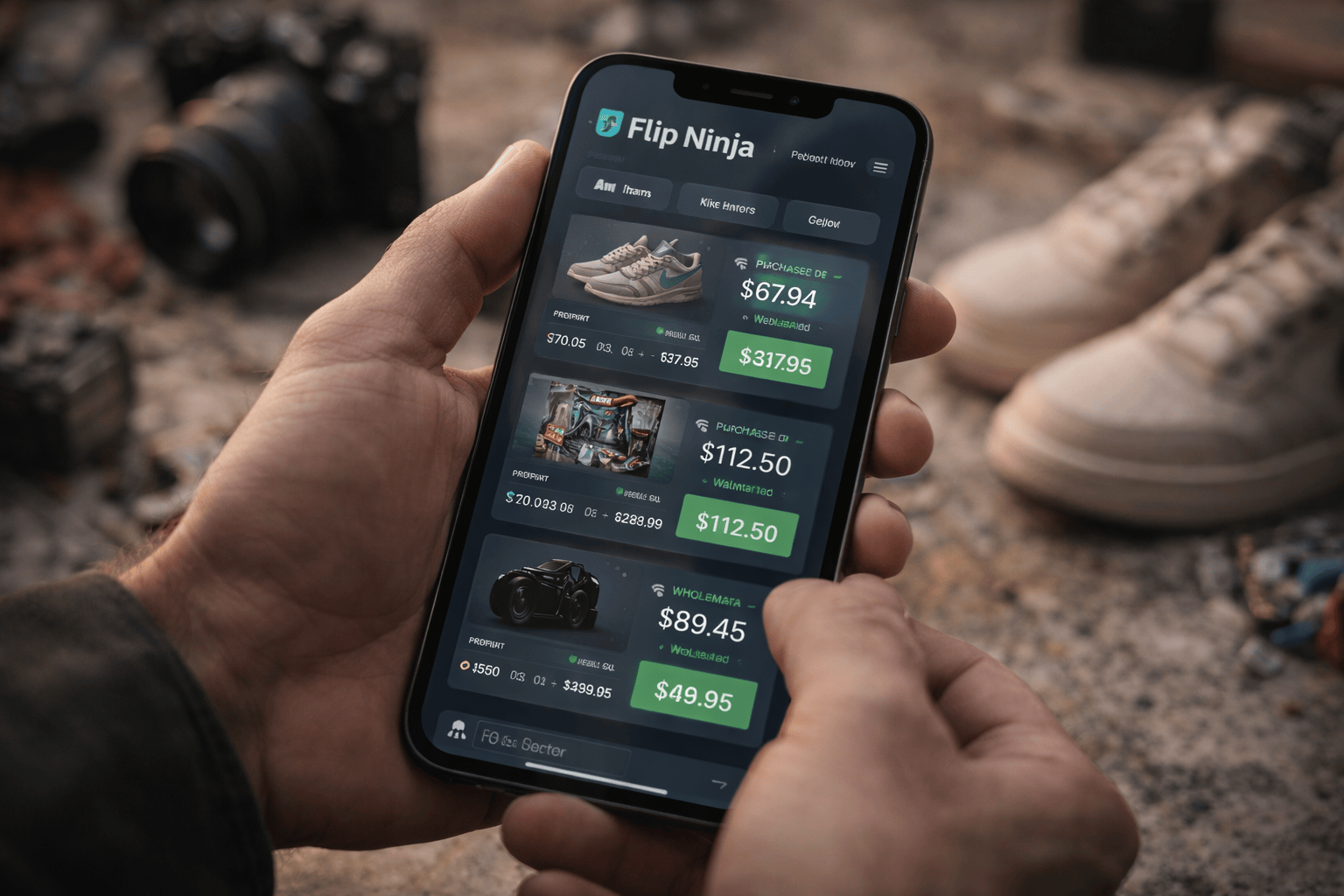
Flip Ninja is software designed to help users identify profitable product flipping opportunities by analyzing price discrepancies across marketplaces.
Its core function:
- Product research automation
- Profit margin calculation
- Fee estimation
- Cross-platform price comparison
Instead of manually comparing prices, Flip Ninja streamlines the process.
In theory, this reduces:
- Time spent researching
- Risk of miscalculated margins
- Emotional decision-making
It transforms flipping from instinct-based to data-driven.
The Real Problem Flip Ninja Addresses
Manual flipping has three major challenges:
1. Time Consumption
Researching individual products across platforms can take hours.
Without tools, you rely on:
- Browser tabs
- Spreadsheets
- Manual fee calculations
Time inefficiency reduces scalability.
2. Hidden Fees and False Margins
Marketplace fees include:
- Selling fees
- Payment processing fees
- Shipping costs
- Return risk
A $20 price difference doesn’t always equal $20 profit.
Software tools like Flip Ninja aim to calculate net profit accurately.
3. Emotional Purchasing
Without structured data, beginners often:
- Overestimate demand
- Underestimate competition
- Purchase slow-moving inventory
Data-driven flipping reduces impulse errors.
How Flip Ninja Software Works
While specific features may vary, product flipping software typically includes:
Product Scanning Engine
Identifies pricing gaps between platforms.
ROI Calculator
Estimates net margin after fees.
Sales Velocity Data
Helps assess demand speed.
Market Comparison Dashboard
Highlights cross-platform opportunities.
The core benefit?
Efficiency.
The Psychology of Product Flipping
Flipping isn’t just math.
It triggers deeper motivations:
- Financial independence
- Control over income
- Entrepreneurial identity
- Freedom from fixed salary constraints
But without tools, flipping can become:
- Overwhelming
- Inconsistent
- Risk-heavy
Flip Ninja positions itself as a structure-builder.
Structure reduces stress.
Common Misconceptions About Product Flipping Software
Misconception 1: Software Guarantees Profit
No tool guarantees sales.
Software identifies opportunity, execution determines outcome.
You still need:
- Capital discipline
- Platform knowledge
- Inventory management
Misconception 2: Flipping Is Easy Money
Flipping is margin management.
It requires:
- Accurate cost tracking
- Inventory turnover monitoring
- Cash flow awareness
Tools enhance, they don’t replace strategy.
The Cost of Not Using Data
Without analytical tools:
- You misprice products
- You misjudge competition
- You overstock slow items
- You tie up capital
Inventory stagnation reduces business agility.
In flipping, speed matters.
The faster you recycle capital, the stronger your growth curve.
Who Should Consider Flip Ninja?
Flip Ninja may be ideal for:
- Retail arbitrage sellers
- Online arbitrage resellers
- Marketplace multi-platform sellers
- Intermediate flippers scaling volume
Less ideal for:
- Casual one-off resellers
- Hobby sellers flipping occasional items
If you want structured flipping tools, help.
Risk Factors to Evaluate
Before committing to any product flipping software:
1. Platform Policy Compliance
Ensure tool usage aligns with marketplace policies.
2. Subscription Cost vs. ROI
Calculate break-even on monthly fees.
3. Learning Curve
Software efficiency depends on proper use.
4. Data Accuracy
Verify product and pricing data reliability.
Due diligence protects capital.
Example Case: Structured vs. Manual Flipping
Manual Approach:
- 3 hours researching
- 5 products purchased
- 2 sell quickly
- 3 stagnate
Structured Software Approach:
- 1 hour filtered research
- 5 high-demand products
- Faster turnover
- Reinvested capital
The difference?
Efficiency and velocity.
Building a Smarter Flipping Strategy
Use this F.L.I.P. Framework:
F – Find Data-Backed Opportunities
Use research tools.
L – Limit Risk Exposure
Avoid over-investing in one SKU.
I – Improve Margins
Factor in all fees before purchasing.
P – Pivot Quickly
Liquidate slow inventory and reinvest.
Software enhances each stage.
Addressing Common Objections
“Can’t I just use free tools?”
Yes, but time becomes your hidden cost.
Free tools often lack:
- Automation
- Integrated fee calculators
- Bulk scanning features
Evaluate trade-offs realistically.
“What if the market becomes saturated?”
Saturation depends on:
- Product niche
- Platform
- Speed of adaptation
Successful flippers rely on agility, not one-time wins.
“Is flipping sustainable long-term?”
It can be if:
- You manage cash flow
- You monitor data trends
- You adapt product categories
Long-term sustainability requires process.
The Bigger Picture: Identity Shift
Flip Ninja is not just about product flipping.
It represents:
- Structured entrepreneurship
- Leveraged technology
- Data-driven income
When you move from guessing to measuring, your identity shifts.
You become strategic.
Strategic operators survive longer.
Should You Explore Flip Ninja?
If you:
- Want to scale product flipping
- Prefer automation over spreadsheets
- Value calculated decisions
- Are serious about reinvesting profits
Flip Ninja may align with your goals.
But remember:
No tool replaces discipline.
Start small.
Test.
Track ROI.
Evaluate monthly performance.
Business growth is systematic, not impulsive.
If you’re serious about improving your flipping efficiency, consider mapping your current research process and identifying where automation could reduce friction.
Clarity leads to better margins.
Frequently Asked Questions (FAQ)
1. What is Flip Ninja and how does it work?
Flip Ninja is product flipping software designed to identify profitable price differences across online marketplaces. It automates product research, estimates selling fees, and helps calculate potential ROI so sellers can make data-driven purchasing decisions instead of relying on guesswork.
2. Is Flip Ninja suitable for beginners?
Yes, but with realistic expectations. While Flip Ninja simplifies research, beginners still need to understand marketplace policies, shipping logistics, and inventory management. The software supports strategy it doesn’t replace learning the fundamentals of reselling.
3. Does Flip Ninja guarantee profits?
No software can guarantee profit. Flip Ninja highlights potential opportunities based on pricing and data analysis, but success depends on execution, market timing, demand fluctuations, and competitive pricing strategies.
4. How does Flip Ninja calculate profit margins?
Flip Ninja typically factors in:
- Marketplace selling fees
- Payment processing fees
- Estimated shipping costs
- Purchase price
This provides a clearer net profit estimate compared to manual calculations, reducing margin errors.
5. Is product flipping sustainable long-term?
Yes, if managed strategically. Sustainable flipping requires:
- Consistent data analysis
- Controlled inventory investment
- Fast capital turnover
- Adaptability to market trends
Software tools like Flip Ninja help improve efficiency, but long-term success depends on disciplined reinvestment and risk management.
6. What is the biggest mistake new flippers make?
The most common mistake is overestimating demand and underestimating fees. Many beginners purchase inventory based solely on price gaps without verifying sales velocity or calculating total costs. Structured research, whether manual or via software like Flip Ninja, reduces this risk significantly.
Recommended Resources
If you want to validate marketplace fees and seller policies before flipping, review the official eBay Seller Fees Guide, which outlines cost structures that directly impact product flipping margins.
For Amazon-based resellers, the Amazon Seller Pricing & Fees Page provides transparent breakdowns of referral and fulfillment fees to help you calculate accurate ROI before sourcing inventory.