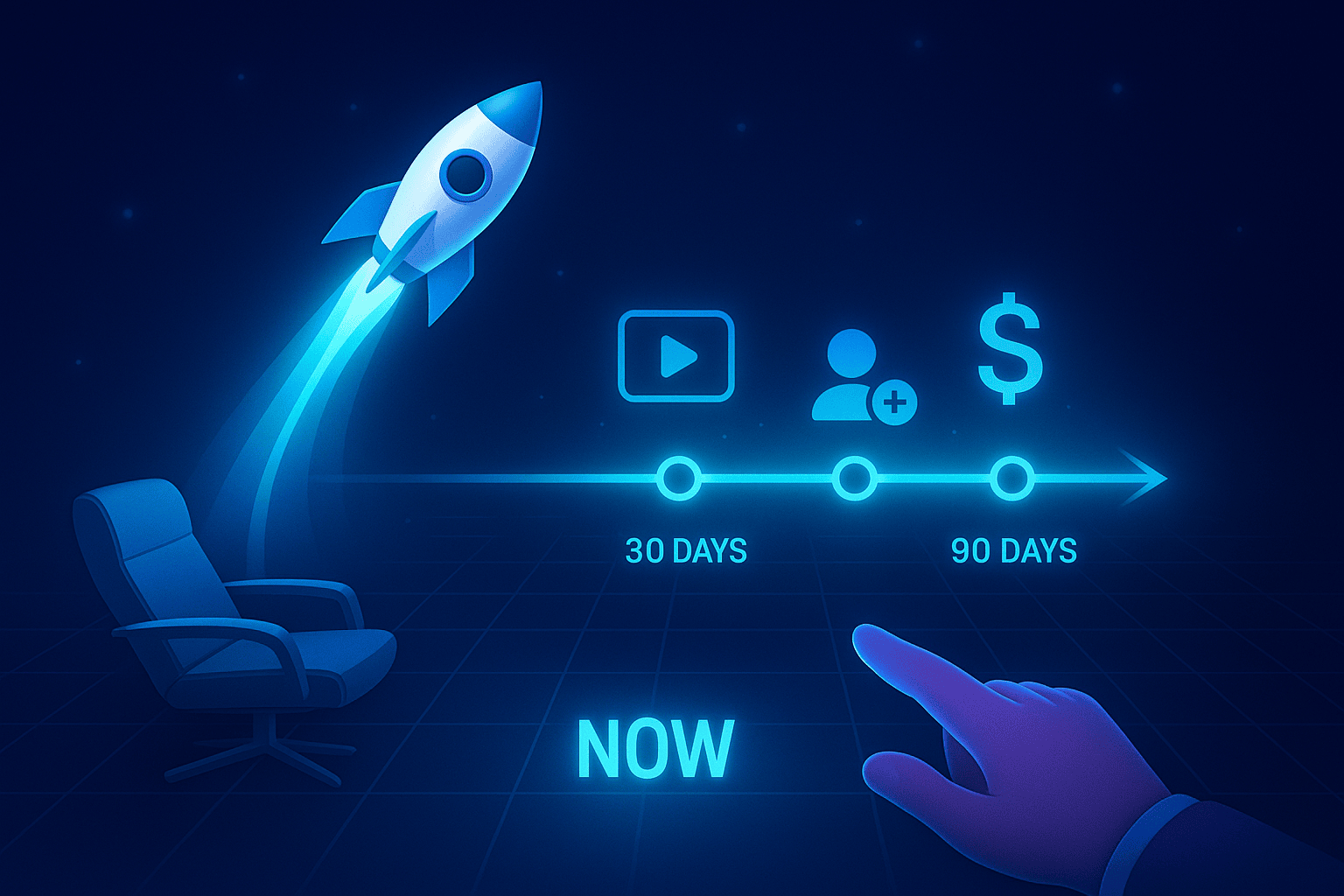
What if the reason your traffic hasn’t exploded yet has nothing to do with budgets, platforms, or timing and everything to do with a belief you were handed early on?
Not because you’re wrong.
Not because you’re behind.
But because that belief almost sounds like common sense.
The Quiet Frustration Behind “Why Isn’t This Working?”
If you’re an online entrepreneur or content creator, this thought probably feels familiar:
“I’m doing everything they say works… so why does traffic still feel unpredictable?”
You’ve watched others scale overnight.
You’ve heard stories about viral posts, algorithm hacks, and ad funnels that “just work.”
And somewhere along the way, a subtle conclusion formed:
- If I want consistent traffic, I need to pay more
- Or crack the algorithm
- Or be everywhere, all the time
So when traffic dips, the frustration isn’t just about numbers.
It’s quieter than that.
It sounds like:
- “Maybe I’m missing something obvious.”
- “Maybe this is just harder for me.”
- “Maybe I need a bigger push.”
That inner tension matters—because it reveals the assumption driving every decision that follows.
The Hidden Assumption No One Points Out
Here’s the belief most creators never consciously question:
Traffic is something you acquire from systems outside of you.
Ads.
Algorithms.
Platforms.
Under this model, traffic feels rented, borrowed, or temporarily granted.
And if that’s true, then instability is normal, and dependence is inevitable.
What’s important to understand is this:
You didn’t invent this assumption.
It’s been reinforced everywhere.
Case studies.
Dashboards.
CPMs.
“Growth hacks.”
So if you’ve been chasing levers instead of leverage, it’s not a personal failure.
It’s a logical response to a flawed frame.
Why the Usual Solutions Keep Disappointing
Let’s gently reframe what’s been happening.
When traffic strategies focus primarily on:
- Paying for attention
- Gaming discovery systems
- Outpacing algorithm changes
They create short-term spikes without long-term certainty.
Not because those tools don’t work, but because they were never designed to carry the entire weight of growth.
This explains something many people quietly notice but rarely say out loud:
- Ads can scale reach, but not resonance
- Algorithms can amplify signals, but not meaning
- Virality can create attention, but not trust
So every time traffic drops, it feels like starting over.
That’s not a motivation problem.
That’s a model problem.
The Traffic Supernova Mental Model (Without the Hype)
Here’s where a different way of seeing changes everything.
Traffic Supernova is not about traffic as volume.
It’s about traffic as momentum.
A supernova isn’t powered by constant external fuel.
It’s the result of internal pressure, alignment, and accumulated energy released at the right moment.
In traffic terms, that means:
- Relevance compounds
- Meaning attracts
- Trust circulates
Instead of asking:
“How do I get more people to click?”
The question quietly becomes:
“Why would the right people come back, share, and stay?”
That shift alone explains why so many “smart” tactics feel exhausting.
Traffic Supernova Starts With Interpretation, Not Execution
This is where most advice goes wrong.
They rush to what to do before addressing how to see.
But creators who experience sustainable growth don’t necessarily:
- Post more
- Spend more
- Optimize harder
They operate from a different interpretation of traffic itself.
In the Traffic Supernova frame:
- Traffic is a byproduct of meaning
- Attention is earned through clarity
- Growth is relational, not mechanical
This doesn’t reject ads or platforms—it contextualizes them.
They become amplifiers, not foundations.
Why Content Quality Isn’t About “Better Writing”
When people hear “focus on content,” they often translate it as:
- Longer posts
- More SEO
- Better hooks
But quality, in this sense, is not about polish.
It’s about cognitive relevance.
High-quality content:
- Makes the reader feel understood
- Helps them reinterpret their situation
- Reduces internal friction and confusion
That’s why some small creators quietly outperform massive accounts.
They’re not louder.
They’re clearer.
Audience Engagement Is Really About Psychological Safety
Another misunderstood idea is “engagement.”
It’s often framed as:
- Comments
- Likes
- Shares
But beneath those metrics is something deeper.
People engage when:
- They feel seen without being sold to
- Their internal questions are named accurately
- Their struggles are normalized, not exploited
When that happens, traffic stops feeling random.
It becomes self-reinforcing.
One piece leads to another.
One insight opens the door to the next.
Trust builds quietly, but powerfully.
That’s how a Traffic Supernova begins long before the spike.
Why This Explains Your Past Results (Without Judging Them)
Here’s the relief most people don’t expect:
Nothing you tried was “wrong.”
Paid ads worked… temporarily.
Algorithm plays worked… until they didn’t.
Posting more helped… until burnout set in.
Those results make sense under the old model.
The difference now is awareness.
You can see that:
- Traffic is not something you chase
- It’s something you earn through alignment
- And sustain through relevance and relationship
That understanding alone changes future decisions.
Where This Way of Thinking Quietly Leads
When this belief settles in, something subtle happens.
You stop asking:
- “What’s the fastest way to get clicks?”
And start noticing:
- “What consistently earns attention without force?”
At that point, tools, systems, and frameworks finally make sense—because they’re built on the right foundation.
This is why ideas like Traffic Supernova resonate later, not sooner.
They don’t work as shortcuts.
They work as multipliers—once the mental model is correct.
The Belief That Changes Everything
If there’s one idea worth holding onto, it’s this:
Sustainable traffic isn’t engineered—it’s attracted by clarity, relevance, and trust.
When you see traffic through that lens:
- Pressure decreases
- Strategy simplifies
- Growth feels less fragile
And perhaps most importantly…
You stop blaming yourself.
Because now you know:
You weren’t failing at traffic.
You were simply solving the wrong problem.
And that realization doesn’t just change what you do next—
It changes how you see the entire game.
Useful Resources
For those seeking a deeper, research-backed understanding of how sustainable traffic is built, the Content Marketing Institute remains a definitive authority on content strategy, audience trust, and long-term visibility.
Additionally, Search Engine Journal offers expert-level analysis on search behavior, SEO evolution, and the structural forces shaping modern traffic—valuable for anyone looking to move beyond tactics and understand traffic as a system.
Frequently Asked Questions About Traffic Supernova
1. What is Traffic Supernova, really about?
Traffic Supernova is not about chasing spikes in traffic. It’s a way of understanding why sustainable traffic grows when clarity, relevance, and trust are in place. It reframes traffic as a byproduct of alignment rather than something you force through ads or algorithms.
2. Is Traffic Supernova an alternative to ads and social media algorithms?
Not exactly. Traffic Supernova doesn’t reject ads or platforms; it repositions them. Instead of being the foundation of growth, they become amplifiers of momentum that already exists through meaningful content and audience connection.
3. Why do ads and algorithm strategies feel inconsistent over time?
Because they rely on external systems you don’t control. When traffic depends primarily on paid reach or platform rules, it naturally feels fragile. Traffic Supernova explains why those methods work temporarily but struggle to create lasting momentum on their own.
4. Does Traffic Supernova mean I need to create more content?
No. It’s not about volume. It’s about relevance and interpretation. One piece of content that helps the audience see their situation more clearly can outperform dozens of posts that only chase visibility.
5. How does audience engagement fit into the Traffic Supernova idea?
Engagement isn’t about likes or comments; it’s about psychological resonance. When people feel understood and safe, they return, share, and trust. That ongoing relationship is what turns isolated traffic into compounding growth.
6. Who is Traffic Supernova most relevant for?
Traffic Supernova resonates most with online entrepreneurs and content creators who feel stuck between paid traffic dependency and unpredictable organic reach and who sense that the real issue runs deeper than tactics.